Silica dust SWMS: preparing the document for your job
Start a silica document with the material and the process: what will be cut, drilled, ground or otherwise disturbed, where and by whom. The resulting dust risk, applicable local rules and selected controls determine the information you need. A completed SWMS does not make uncontrolled work safe.
Identify the material and every dust-generating stage
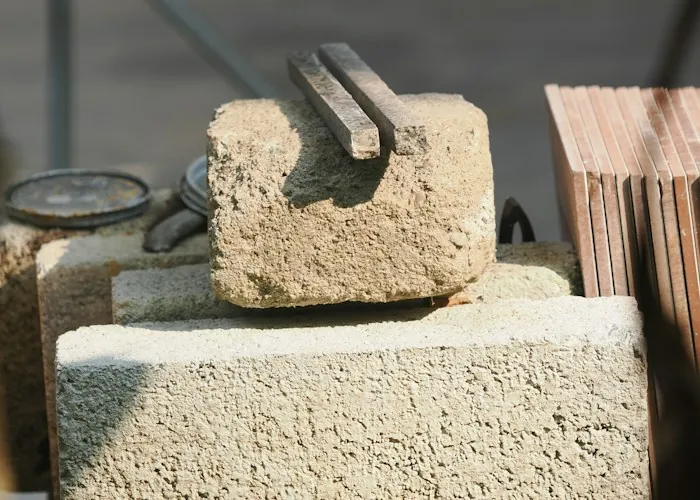
Concrete, masonry and other materials can contain crystalline silica. Collect supplier information, safety data sheets where available, and reliable information about existing materials. A photograph or an assumption that a product is “just concrete” is not a material assessment.
List the process, tools, location, duration, frequency and workers potentially exposed. Include people nearby, cleaning, waste handling and maintenance. Record what is known and identify missing information before deciding the work can proceed.
Official reference: SafeWork NSW — crystalline silica ↗
Check which document the jurisdiction requires
Under the model WHS approach, determine whether processing a crystalline silica substance is high risk. High-risk processing brings additional requirements, including a silica risk control plan. A SWMS may serve in place of that plan for construction work only when it contains all the required plan information. A document called “Silica SWMS” is not automatically sufficient.
Victoria uses a crystalline silica hazard control statement for high risk crystalline silica work under its OHS framework. WorkSafe Victoria describes when a SWMS for high-risk construction work can address the required matters instead. Check the full statement requirements for the work; do not assume the two document names are interchangeable.
Safe Work Australia provides national model guidance, while states and territories apply their own laws. Use the selected jurisdiction’s requirements and the current local regulator material. Engineered stone prohibitions and any permitted work with legacy installations require a separate check; paperwork cannot authorise prohibited work.
Official reference: Safe Work Australia — silica model code, section 3 (August 2025) ↗
Official reference: WorkSafe Victoria — preparing a silica hazard control statement ↗
Gather evidence for the actual controls
Record the chosen measures, the person responsible for each and how their effectiveness will be checked. Do not leave a menu of possible controls with no decision about which ones apply.
- Whether a different material or method can remove or reduce the dust-generating work.
- Tool and control-system details, including relevant water suppression or extraction specifications and maintenance arrangements.
- How the work area is separated from other people and how exposure outside it is controlled.
- The cleaning and waste method, including who provides and maintains suitable equipment.
- Respiratory protection requirements and the associated selection, fit, training and maintenance arrangements where applicable.
- The basis for air monitoring, health monitoring, worker training and any local notification or register duties.
Official reference: SafeWork NSW — crystalline silica technical fact sheet ↗
A preparation example: concrete drilling in an occupied area
For a proposed drilling task, collect the substrate information, drill and dust-control specifications, work-area layout and details of nearby occupants. Ask who installs the separation, checks the control equipment and manages cleaning. If exposure cannot be confidently assessed, arrange suitable specialist input.
This is an information-gathering example, not a drilling method. “Use a mask” does not resolve whether the tool controls are suitable, whether nearby people are protected or whether the required monitoring and training have been arranged.
Use the document alongside the work arrangements
Review the Crystalline Silica Dust Management document and its public layout sample. Also check the actual task document, such as Concrete Cutting and Drilling or Patching, Levelling & Grinding of Concrete. Coordinate overlapping controls.
Choose the work’s jurisdiction, complete the online job form from the paid order and keep the completed copy with the supporting assessment and required records. Review it with the people doing the work. If the material, process or controls change, reassess before continuing.
Our document review record identifies source-review limits. The document records the planned method; equipment selection, competence, exposure assessment and the controls themselves still need to be dealt with on site.
If comparing the Concrete Works Bundle, note that it includes concrete cutting and grinding documents but does not include the separate Crystalline Silica Dust Management document. Compare the listed scopes with your work.
General document guidance from SiteWork Safety. Assess the actual work, implement the controls and check the local requirements. State requirements and source-based document review.
Related documents
 Crystalline Silica Dust ManagementView work covered and sample →
 Concrete Cutting and DrillingView work covered and sample →Patching, Levelling & Grinding of ConcreteView work covered and sample →Concrete Works BundleView work covered and sample →