Scissor lift SWMS: job details to have ready
Have the job information in front of you before opening the form. This reduces back-and-forth while you complete the document and makes gaps in the plan easier to spot.
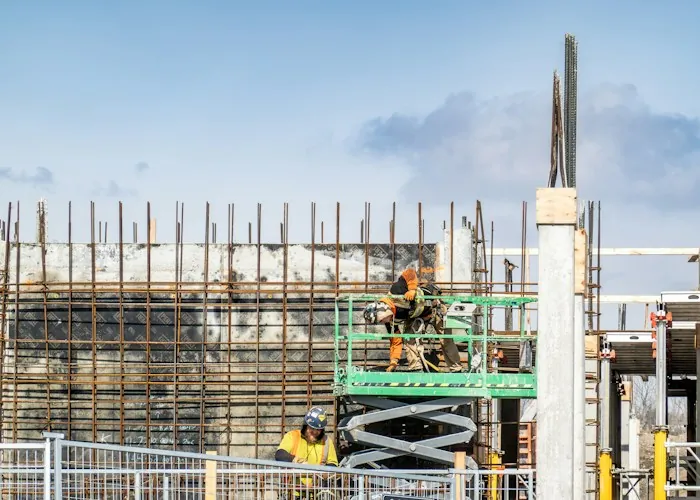
Start with the equipment and work area
Safe Work Australia identifies EWP risks involving unsuitable equipment, ground conditions, overhead obstructions, traffic, crushing and falling objects. Review the work area and the access route, along with inspection and maintenance records. Selection and use must suit the site and the manufacturer’s instructions.
Official reference: Safe Work Australia — managing EWP risks ↗
Information to collect
- Machine make, model, identification, intended task and the relevant operating manual.
- Work location, travel route, supporting surface, slopes and any openings or edges.
- Nearby services, overhead obstructions, other vehicles, workers and public access.
- The selected separation, access and operating controls, with responsibilities for putting them in place.
- Operator competence, pre-start checks, inspection records and any required authorisations.
- Emergency lowering and rescue arrangements for this machine and location, including people, access and communication.
Check the SWMS trigger and the lift’s actual role
A scissor lift used for construction can engage the powered-mobile-plant high-risk category, as well as the fall category where applicable. Check the local definition and do not rely on the platform height alone. Identify whether the job includes travel, overhead installation, deliveries or other interacting tasks.
Collect who will operate the lift, who can use the ground controls, how the area will be separated from others and how a rescue could be carried out. A ticket or familiar machine name does not answer every site-specific question.
Official reference: SafeWork NSW — high-risk construction work categories ↗
Avoid copying settings from another machine
Do not carry across platform loads, slope limits, weather limits, clearances or fall-protection arrangements without checking the actual equipment and applicable requirements. A boom lift and a scissor lift are not interchangeable. The form records the planned work; it is not an operating manual or training course.
Complete, check and keep the job copy
The SiteWork Safety scissor lift document has a five-page core. Enter the company and project details, review each work stage and complete the job-specific controls. Long answers continue onto linked pages rather than disappearing beyond a box.
Print the whole completed document, including continuation pages. Use it during the crew briefing and keep it accessible. If your work changes, revisit the method before continuing. The product page and sample show the format before you buy.
Open Use of Scissor Lift and its public layout sample. The watermarked sample is a cropped layout excerpt with sanitised placeholders. PDF and Word documents included. Review and complete the purchased document for the actual job. Choose the job’s jurisdiction before ordering. Read working at heights information and how to fill out a SWMS for the related preparation steps.
General document guidance from SiteWork Safety. Assess the actual work, implement the controls and check the local requirements. State requirements and source-based document review.
Related documents
 Use of Scissor LiftView work covered and sample →Work at HeightView work covered and sample →
 Site EstablishmentView work covered and sample →